
- About
-
Divisions
- National Farm Animal Care Council
- Canadian Animal Health Surveillance System
- Emergency Management
- Work Areas
- E-learning Campus
- AHC Forum
- Communications

.png)
Professor and Research Chair in Animal Welfare at University of British Columbia, Dr. Nina von Keyserlingk has dedicated her career to improving the lives of farm animals through innovative, interdisciplinary research. Among the first researchers to combine experimental and qualitative approaches to animal welfare, she has published more than 400 peer-reviewed scientific papers and is an internationally respected speaker.
Her research has transformed how animal agriculture understands and advances animal welfare, helping drive meaningful change across the sector. A passionate mentor and champion for evidence-based progress, Dr. von Keyserlingk was appointed an Officer of the Order of Canada in 2025 in recognition of her extraordinary contributions.
.png)
Robert Hoste, Senior Pig Production Economist at Wageningen Social & Economic Research, brings more than 35 years of experience analyzing the economics, sustainability, and competitiveness of pig production around the world.
As Chair of InterPIG and a recognized expert with agri benchmark Pig, European Pig Producers, and the Dutch Council of Experts for Sustainable Husbandry Systems, Robert has advised governments, producers, and industry leaders across Europe, Asia, and South America. His work helps shape practical strategies that improve farm performance, supply chain resilience, and long-term sustainability.
From international production cost benchmarking to emerging sustainability challenges and the future of global pork production, Robert delivers evidence-based perspectives that resonate with producers, policymakers, researchers, and industry decision-makers alike.
.png)
Dr. Claire Windeyer is a consultant with ACER Consulting Ltd. and former Associate Professor at the University of Calgary Faculty of Veterinary Medicine, where she taught epidemiology, health management, and bovine medicine.
Internationally recognized for translating research into practical, on-farm solutions, Dr. Windeyer's work focuses on calf health and welfare, producer decision-making, disease prevention, and knowledge mobilization. Her evidence-based approach has helped producers, veterinarians, researchers, and industry leaders bridge the gap between science and everyday practice.
Known for her engaging presentations and practical insights, Dr. Windeyer delivers actionable strategies that improve animal health, strengthen management decisions, and support resilient, sustainable livestock production.
Dr. Beth Cookson, Chief Veterinary Officer of Australia
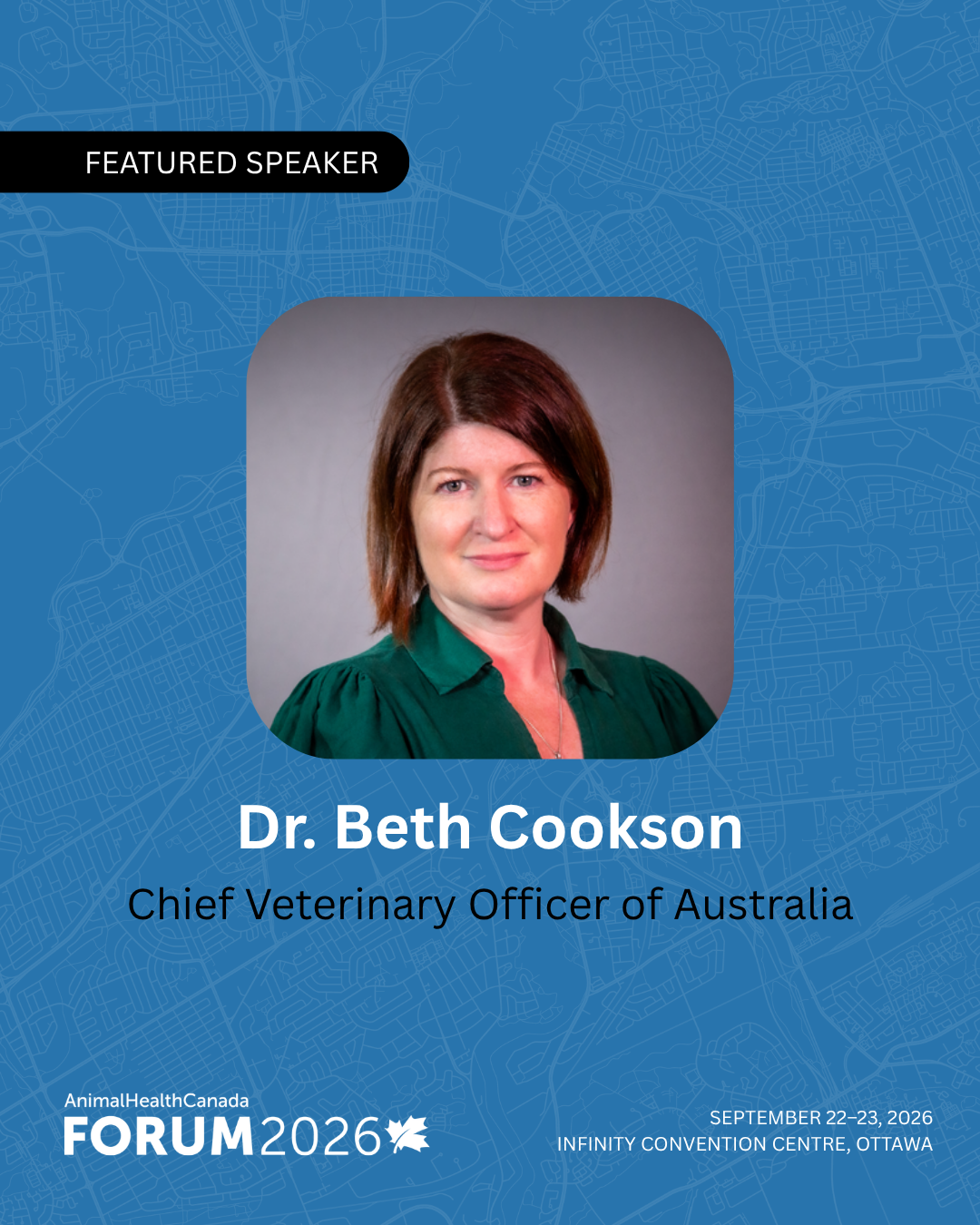
As the Australian Government’s principal advisor on animal health and biosecurity and Australia’s Delegate to the World Organisation for Animal Health (WOAH), Dr. Cookson works at the intersection of government, industry, science, and international collaboration. Her experience spans animal health surveillance, emergency disease preparedness and response, biosecurity risk analysis, trade, and capacity building across Australia and neighbouring countries.
From strengthening partnerships to prepare for threats such as Foot and Mouth Disease to advancing coordinated action on antimicrobial resistance, her work demonstrates the power of alignment across sectors and borders.
Join us to hear Dr. Cookson’s insights and explore what Australia’s experience can teach us about strengthening Canada’s collective approach to animal health and biosecurity.
.png)
With more than 30 years of experience spanning veterinary practice, government leadership, emergency animal disease preparedness, and national biosecurity policy, Dr. Allan has dedicated her career to strengthening partnerships that protect animal health and support resilient agricultural systems. As CEO of Animal Health Australia, she works at the forefront of collaboration between government, industry, and stakeholders to enhance emergency response capability and address emerging biosecurity challenges.
Drawing on her extensive leadership experience and passion for partnership-based solutions, Dr. Allan will share valuable insights into building resilient animal health systems, advancing One Health principles, and preparing for the challenges of tomorrow.
Whether you're involved in animal health, emergency management, government, or industry, this is an opportunity to learn from one of Australia's foremost leaders in collaborative biosecurity.
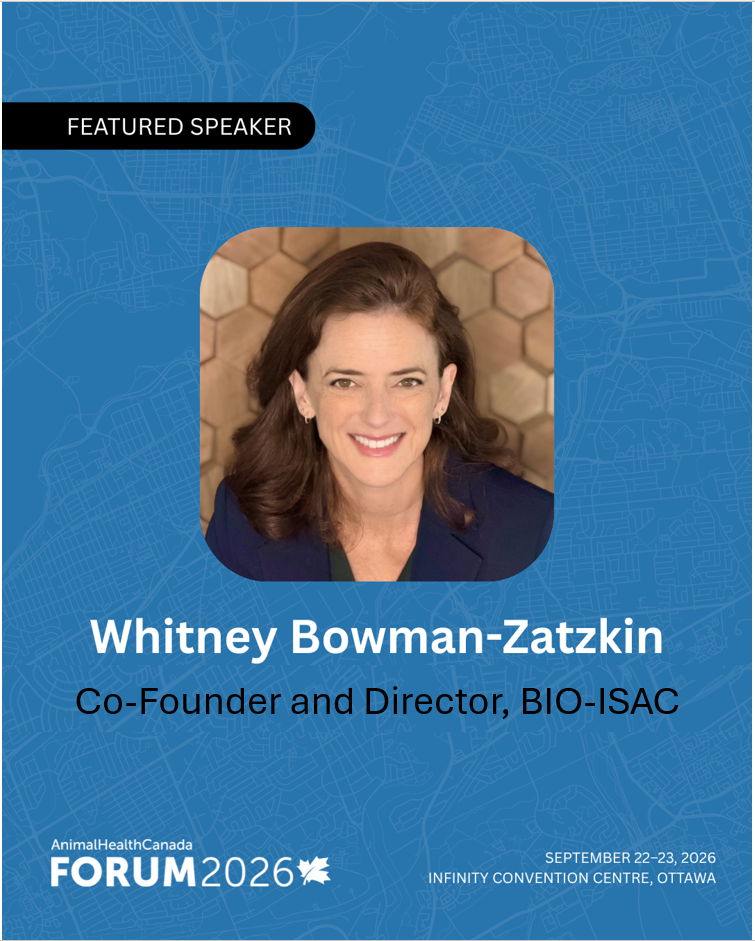
Whitney Bowman-Zatzkin is a recognized leader at the intersection of biotechnology, cybersecurity, and systems resilience. As co-founder and director of BIO-ISAC, she leads global efforts to strengthen cyberbiosecurity across the bioeconomy—from agriculture and food systems to AI, supply chains, healthcare, and vaccine development.
With more than 20 years of experience, Whitney has built an impressive career advancing healthcare policy, quality improvement, data integrity, transparency, and cross-sector collaboration, including leadership of initiatives supported by the Robert Wood Johnson Foundation. Known for connecting diverse stakeholders to tackle complex challenges, she is helping shape how governments, industry, and researchers work together to protect critical biological innovation and infrastructure.
At Animal Health Canada Forum 2026, Whitney will share timely insights into emerging cybersecurity risks specific to Canada's animal health and agri-food sectors, using Highly Pathogenic Avian Influenza (HPAI) as a case example.
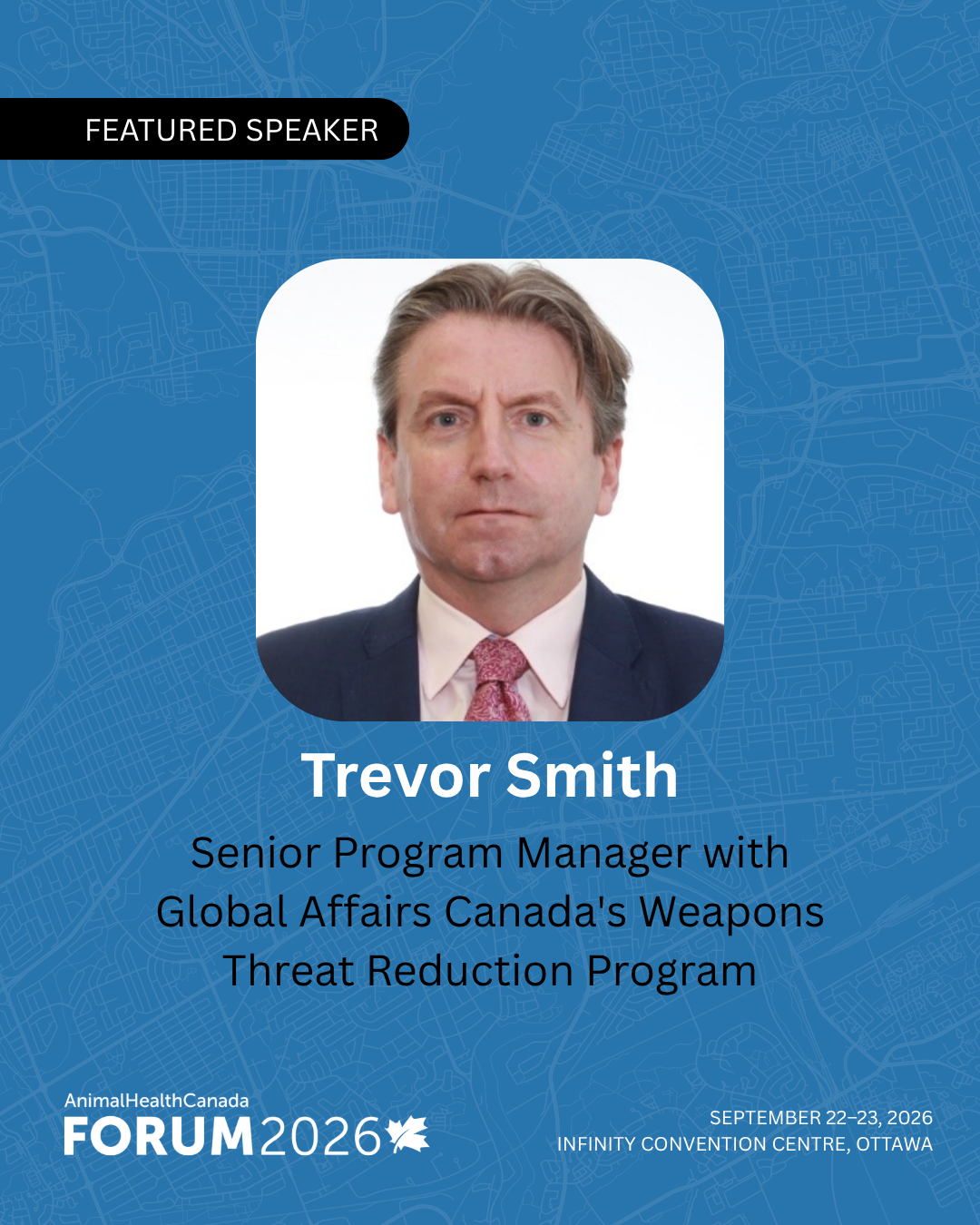
Trevor Smith, Senior Program Manager with Global Affairs Canada's Weapons Threat Reduction Program, has spent more than two decades advancing international efforts to prevent, detect, investigate, and respond to chemical, biological, radiological, and nuclear (CBRN) threats.
Since joining Canada's Weapons Threat Reduction Program at its inception in 2002, Trevor has overseen the development and implementation of more than $750 million in international threat reduction and capacity-building initiatives spanning Africa, the Americas, Asia, and Europe. His leadership has helped launch groundbreaking global initiatives, including the Signature Initiative to Mitigate Biological Threats in Africa (SIMBA), the Countering WMD Disinformation Initiative, and IMPACT-WMD.
.png)
Professor at the University of Alberta's Faculty of Law and School of Public Health, and Research Director of the Health Law Institute, Timothy Caulfield has spent decades examining the intersection of science, health policy, and society.
Through more than 400 academic publications, four bestselling books, the internationally acclaimed television series A User's Guide to Cheating Death, and the science engagement initiative #ScienceUpFirst, he has become one of Canada's most influential voices in combating misinformation and championing evidence-based decision-making.
Whether you work in animal health, public health, government, academia, or industry, this thought-provoking session will explore the political and social forces driving misinformation and why safeguarding trust in science is essential to protecting the health of animals, people, and our shared future.
.png)
A veterinarian-turned-economist and internationally recognized One Health policy expert, Dr. Lhermie brings a unique perspective shaped by clinical practice, pharmaceutical industry leadership, and world-class research. He advises the World Health Organization (WHO), the Food and Agriculture Organization (FAO), and the World Organisation for Animal Health (WOAH) on antimicrobial resistance and pandemic preparedness while leading initiatives that bridge science, economics, and policy.
Drawing on global experience in livestock systems and international health governance, Dr. Lhermie will examine how the information ecosystem influences animal health outcomes, economic resilience, and policy decision; and what Canada can do to strengthen preparedness in an increasingly connected world.